
Polio and Post-Polio Syndrome
Infections & FeverPolio (poliomyelitis) is a viral infection that can cause paralysis and, in severe cases, death. Polio was once widespread in India; thanks to massive national immunisation drives, India was certified polio-free by the WHO in 2014 and has remained so.
Also known as: Infantile paralysis, PPS, Poliomyelitis
Last updated
Videos about Polio and Post-Polio Syndrome (3)
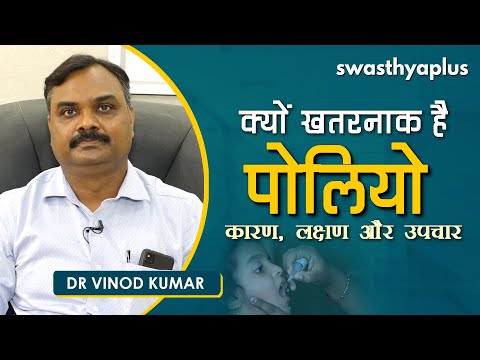 15:02
15:02क्यों ख़तरनाक है पोलियो - जानें इसके लक्षण और उपचार | Dr Vinod Kumar on Polio in Hindi | Treatment
Dr Vinod Kumar
76K views
 14:07
14:07পোলিও ভ্যাকসিন গুরুত্বপূর্ণ | Polio Vaccination in Bangla | Dr Debasree Guha
Dr Debashree Guha
17K views
 7:35
7:35ಪೋಲಿಯೊ: ರೋಗಲಕ್ಷಣಗಳು ಮತ್ತು ತಡೆಗಟ್ಟುವಿಕೆ | Polio: How to Prevent? in Kannada | Dr Sandesh M
Dr Sandesh M
6.1K views
About Polio and Post-Polio Syndrome
About this summary: Written by Swasthya Plus for Indian readers, using MedlinePlus, National Library of Medicine as a reference source. For personal guidance, please consult a qualified Health Expert.
Polio (poliomyelitis) is a viral infection that can cause paralysis and, in severe cases, death. Polio was once widespread in India; thanks to massive national immunisation drives, India was certified polio-free by the WHO in 2014 and has remained so. The virus continues to circulate in a few other countries, which is why immunisation here continues. Some polio survivors develop new weakness decades later — called post-polio syndrome.
How polio spreads
- Mostly faecal-oral — infected faeces contaminating food or water
- Also respiratory droplets from an infected person
- The virus multiplies in the intestine, then in a small fraction of cases invades the nervous system
- Most infections are asymptomatic or cause only mild illness
Symptoms
Most infections are silent. When they cause illness:
- Minor illness — fever, sore throat, headache, vomiting, tiredness, muscle aches — resolves in days
- Non-paralytic polio — symptoms plus meningitis-like signs (stiff neck, back pain)
- Paralytic polio — sudden muscle weakness or paralysis, often asymmetric, starting in the legs; in the most severe form, paralysis of the muscles that control breathing
Post-polio syndrome
Decades after a bout of polio (typically 15-40 years later), some survivors develop new symptoms:
- New muscle weakness, often in previously-affected muscles
- Severe fatigue
- Muscle and joint pain
- Breathing and swallowing problems
- Sleep disturbances
Post-polio syndrome progresses slowly and is not a recurrence of the infection. It's managed with rehabilitation, pacing, physiotherapy, mobility aids, and sometimes respiratory support. Specialist neurologists and physiatrists guide care.
Prevention
Vaccination is the only effective prevention:
- Oral polio vaccine (OPV) and inactivated polio vaccine (IPV) are both part of India's routine childhood immunisation
- National immunisation days (Pulse Polio) provide extra doses to all children under 5 at intervals
- Pressure on vaccination coverage in conflict or under-resourced areas must be maintained — reintroduction of the virus remains a theoretical risk as long as any country still has polio
- Travellers to polio-endemic countries may need booster vaccination
The near-elimination of polio is one of modern medicine's greatest public-health successes. Continuing vaccination protects the generations to come.
Reference source: MedlinePlus, National Library of Medicine